Introduction
The live event ecosystem across the United States is rapidly shifting toward digital-first discovery and streamlined management workflows. Whether you are a music enthusiast searching for Concert Tickets USA or an event coordinator looking for an efficient Event Ticketing Platform USA, modern platforms have reshaped how experiences are hosted and attended. Navigating ticket selections, entry rules, registration records, and audience outreach requires a clear understanding of digital ticketing tools.
This guide explores the mechanisms of Online Event Ticket Booking USA, practical discovery strategies for finding Events Near Me, and proven workflows to Sell Event Tickets Online.
The Evolution of Online Event Discovery and Ticket Booking in the USA
Finding live entertainment or professional gatherings used to rely heavily on local print flyers, traditional press listings, or venue box offices. Today, centralized digital platforms allow attendees across major metropolitan areas—from New York City to Los Angeles—to discover tailored experiences instantly.
Modern event systems combine search filters, geolocation technology, and instant checkout processes. Attendees can browse live categories by region, compare entry tiers, and receive digital confirmation within minutes.
How Digital Discovery Works for Attendees
- Location-Based Filtering: Attendees filter listings to find local experiences in specific regions, such as Events in New York City or local gatherings in Chicago and Houston.
- Category Selection: Users refine searches based on interests like live music, stand-up comedy, business conferences, or educational workshops.
- Date and Access Options: Visitors check single-day or multi-day options and inspect scheduled start times.
- Instant Registration: Attendees complete registration forms online and secure entry badges or digital tickets without physical box office queues.
Exploring Popular Event Types Across American Cities
Different regions present unique event ecosystems. Major US hubs feature diverse event types catering to distinct audience segments.
| Event Category | Typical Audience | Key Locations | Essential Requirements |
| Live Music & Festivals | Concertgoers, fans | Austin, Nashville, New York City | Tiered pricing, mobile ticket validation |
| Business Conferences | Executives, entrepreneurs | San Francisco, Chicago, Washington, D.C. | Custom registration fields, professional badges |
| Comedy & Nightlife | Entertainment seekers | Los Angeles, Miami, Las Vegas | Age restriction notices, reserved seating |
| Workshops & Seminars | Professionals, students | Boston, Seattle, Atlanta | Seat capacity caps, schedule access |
Whether exploring Upcoming Events in USA metro regions or smaller local markets, clear event details help attendees choose experiences that fit their schedule.
What Attendees Should Consider Before Booking Event Tickets Online
To ensure a smooth experience when purchasing tickets online, attendees should verify several critical details before finalizing a transaction:
- Venue Rules and Age Limits: Confirm age minimums (such as 21+ for certain nightlife venues) and check bag policies or security requirements prior to arrival.
- Ticket Delivery Method: Verify how the ticket will be delivered, whether via account portal, direct email confirmation, or digital barcode download.
- Refund and Transfer Policies: Review seller rules regarding ticket cancellations, postponements, or transfers.
- Schedule Details: Confirm start times, door opening hours, and headliner schedules.
Practical Event Creation and Publishing for US Organizers
For independent promoters, non-profits, and corporate hosts, learning how to List Your Event Online USA is a fundamental step toward filling a venue.
[Define Event Details] ➔ [Configure Ticket Tiers] ➔ [Set Registration Rules] ➔ [Publish & Promote]
Key Steps to Publish an Event Listing
- Outline Core Information: Write a clear title, structured event overview, and precise location details.
- Establish Ticket Categories: Offer general admission, early-bird rates, or VIP access tiers depending on your capacity planning.
- Set Up Form Fields: Collect relevant attendee details such as name, contact information, company affiliation, or dietary preferences during registration.
- Publish to an Event Marketplace: Launch your event live on a digital portal so local audiences searching for events can discover it easily.
An illustrative example of this process involves a independent music promoter in Chicago organizing an acoustic showcase. By drafting clear door times, establishing general admission pricing, and publishing the listing on a recognized marketplace, the promoter ensures potential attendees find all necessary details in one centralized place.
How Event Registration and Management Software Streamlines Workflows
Handling registrations manually through spreadsheets often leads to lost data, check-in delays, and missed communication. Implementing modern Event Registration Software USA and comprehensive Event Management Software USA platforms eliminates administrative friction for hosts.
Core Functions of Event Management Software
- Attendee Tracking: Organizers monitor real-time registration counts and track ticket availability across multiple categories.
- Automated Data Collection: Structured online registration captures necessary participant info at the moment of checkout.
- Attendee Communication: Organizers update registered guests about venue updates, parking details, or schedule changes through account tools.
- Capacity Management: Automatic inventory caps prevent overselling for space-constrained workshops or private venues.
Strategies to Improve Event Visibility and Ticket Sales
Setting up a event page is only the first step; reaching attendees requires active promotion.
- Optimize Titles and Descriptions: Use clear terms that include your city and event theme (e.g., “Seattle Tech Networking Mixer”) so local searchers can find your page.
- Leverage Early Bird Tiers: Build early sales momentum by introducing discounted early-bird tickets with explicit expiration dates.
- Share Across Digital Channels: Distribute your direct event link across professional networks, social media pages, and email newsletters.
- Clear Call-to-Actions: Make sure your promotional materials direct users straight to your online registration form.
MyEventsNow USA: Connecting Attendees and Event Organizers
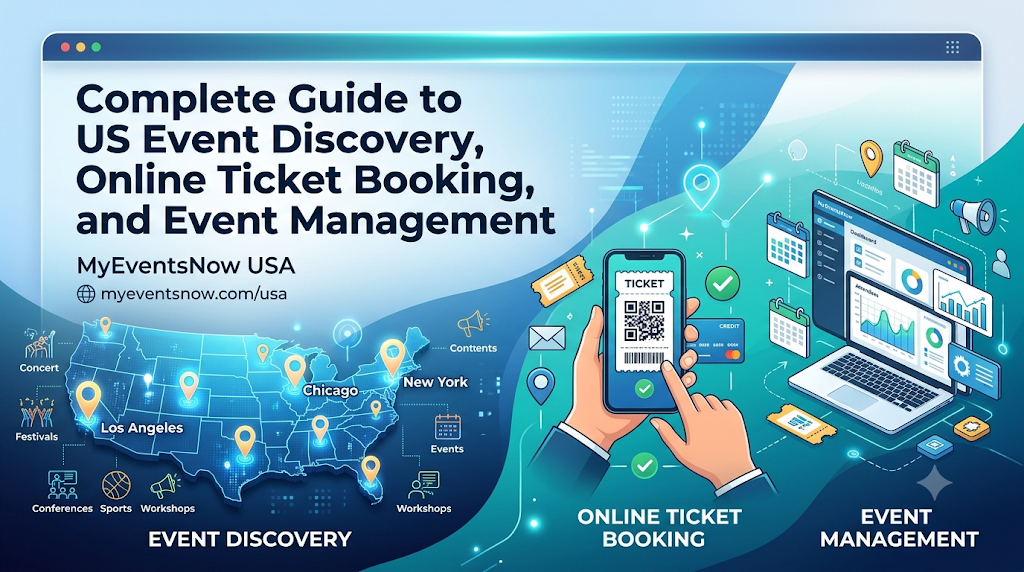
MyEventsNow USA provides a centralized event discovery, ticket booking, and event management platform designed to connect organizers and audiences across the United States.
The platform offers features tailored to both event-goers and event creators:
- For Event Attendees: Discover local entertainment, concerts, community gatherings, and professional conferences. Browse listings by city, inspect venue locations, select ticket quantities, and complete secure online registration.
- For Event Organizers: Access straightforward tools to create listings, configure ticket categories, set up registration forms, manage attendee data, and handle event communications.
By bringing event publishing, ticket booking, and audience registration under one ecosystem, MyEventsNow USA helps organizers streamline operations while making experience discovery simple for attendees nationwide.
Frequently Asked Questions
How does online event ticket booking work for attendees?Attendees select an event listing, choose their desired ticket type and quantity, fill out the required registration fields, and confirm the order. Confirmation details are typically sent via email or saved within the user account.
Where can I find upcoming concerts and events near me in the US?You can use dedicated event discovery platforms like MyEventsNow USA to browse upcoming music concerts, comedy shows, and business conventions filtered by city, date, or category.
How do event organizers list an event online in the USA?Organizers log into an event platform, enter event details (title, description, date, location), define ticket options, set up attendee registration fields, and publish the listing.
What are the key benefits of using an event ticketing platform in the USA?An event ticketing platform helps organizers handle ticket categories, track bookings, collect attendee details, and reach broader regional audiences efficiently.
Can independent promoters sell event tickets online easily?Yes, independent promoters can publish listings, configure pricing tiers, set capacity limits, and direct their target audience to an online checkout page.
How does event registration software assist with conference management?Event registration software automates the collection of professional details, tracks headcount limits, generates attendee records, and facilitates pre-event communications.
What information should be included in an online event listing? A thorough event listing includes a descriptive title, event date and time, detailed location or venue address, ticket prices, schedule, age requirements, and entry rules.
Is event management software suitable for small community gatherings?Yes, event management software works well for local meetups, workshops, and non-profit fundraisers by organizing attendee sign-ups and tracking guest lists without technical complexity.
How can I find events in major cities like New York City or Los Angeles?Filter your search by location on event discovery websites to view upcoming festivals, shows, and conferences happening in specific metropolitan areas.
What should organizers do to improve event visibility online?Organizers should craft clear descriptions, offer clear ticket tiers, share event page links across social channels, and publish on structured event discovery platforms.
Conclusion
Navigating the American live event landscape is straightforward when both hosts and attendees utilize modern digital tools. For attendees, online booking platforms offer a simple way to explore local culture, secure concert access, and stay informed on event details. For organizers, leveraging centralized registration software simplifies logistical management and expands audience reach. Platforms like MyEventsNow USA bridge these needs, offering a practical ecosystem for discovering, hosting, and managing events across the United States.