
Introduction
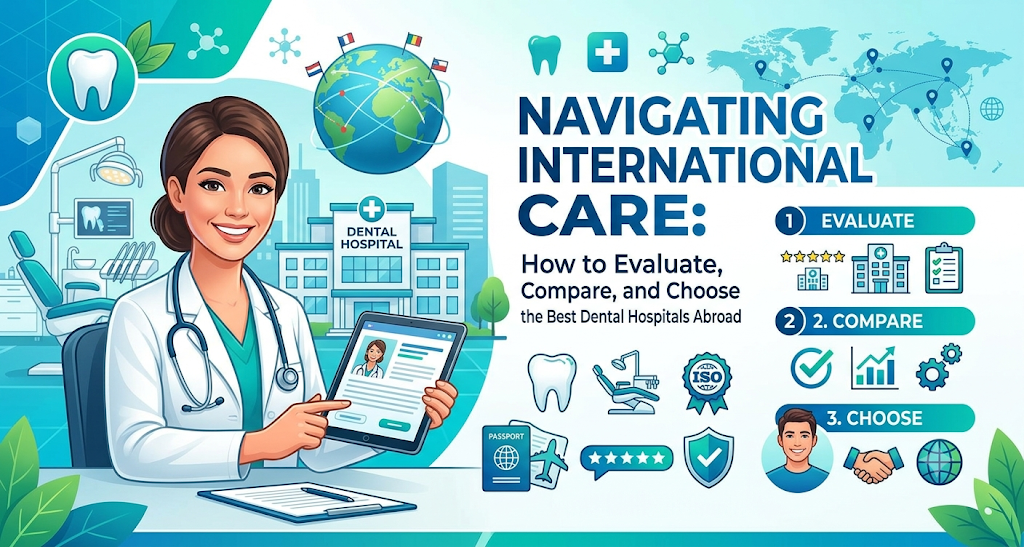
Planning major dental care—whether a single implant, a cosmetic smile makeover, or full-mouth reconstruction—is a significant personal and financial decision. In recent years, thousands of patients annually have begun looking beyond their local geographical boundaries to find high-quality care. The growth of international dentistry has made global options accessible, but it has also introduced a complex layer of research for patients to navigate independently.
Comparing providers across different cities or countries involves far more than skimming online pricing lists. A decision based solely on upfront costs can overlook essential factors such as clinical qualifications, hospital accreditation standards, sterilization protocols, prosthetic material quality, and long-term aftercare. Evaluating international dental care requires an organized approach focused on patient safety, clinical transparency, and complete treatment clarity.
This guide provides an objective framework to help you evaluate international dental hospitals, understand procedure mechanics, compare true end-to-end costs, and make informed choices aligned with your long-term oral health.
Understanding Dental Tourism
The term dental tourism refers to the practice of traveling outside one’s home region or country to receive dental care. Patients consider international dental care for several reasons, including high local treatment costs, long waiting lists for specialized care in public health systems, or a desire to combine restorative care with travel.
Common treatments sought internationally include:
- Implant Dentistry: Single-tooth implants, implant-supported bridges, All-on-4, and full-arch fixed restorations.
- Cosmetic Dentistry: Porcelain veneers, full-coverage crowns, and smile redesigns.
- Restorative & Prosthetic Dentistry: Complex root canal treatments, full-mouth bridges, and full or partial dentures.
Potential Advantages
When properly researched and planned, receiving care abroad can offer distinct advantages:
- Access to Experienced Specialists: Many international dental hubs feature clinics staffed by clinicians with extensive postgraduate training and high volume in specific procedures.
- Advanced Technology Integration: Leading international centers often feature integrated digital workflows, including 3D cone-beam computed tomography (CBCT), intraoral optical scanners, and computer-aided design and manufacturing (CAD/CAM) dental laboratories.
- Cost Savings on Specific Procedures: Geographic variations in operational overhead, labor costs, and living expenses allow high-standard care to be provided at lower costs than in some Western nations.
Important Limitations and Risks
To maintain an objective view, patients must acknowledge the inherent challenges of international treatment:
- Compressed Timelines: Complex biological processes—such as bone integration with implants (osseointegration) or soft-tissue healing—cannot be artificially rushed.
- Follow-up Logistics: Returning to an overseas clinic for minor adjustments, bite alignments, or post-treatment complications can be costly and logistically difficult.
- Variations in Regulatory Oversight: Licensing boards, accreditation standards, and legal recourse differ substantially across international borders.
Every patient’s oral anatomy is unique. A procedure that was successful for one person may be clinically inappropriate for another. An individual clinical evaluation is always necessary before determining suitability for any treatment.
How to Research the Best Dental Hospitals
Determining which facility qualifies as a top-tier provider requires evaluating tangible clinical standards rather than relying on marketing materials. When evaluating dental hospitals, prioritize these core indicators:
1. Clinician Credentials and Specialization
Verify the specific qualifications of the treating team. In dentistry, expertise is specialized:
- Prosthodontists specialize in the restoration and replacement of teeth (crowns, bridges, complex prosthetics).
- Periodontists focus on gum health, supporting bone structures, and surgical placement of implants.
- Oral and Maxillofacial Surgeons handle complex bone grafting, sinus lifts, and advanced surgical extractions.
Inquire whether the practicing clinicians hold recognized postgraduate qualifications, hold active memberships in professional associations, and participate in ongoing continuing education.
2. Hospital and Clinic Accreditation
Accreditation from independent national or international bodies indicates that a facility adheres to established operational, safety, and hygiene standards. Look for facilities monitored by national healthcare regulatory authorities or international quality management systems (such as ISO certifications for medical facilities).
3. Diagnostic Capabilities and Technology
Modern implantology and restorative dentistry rely heavily on precise diagnostic imaging. A qualified hospital should possess:
- 3D CBCT Scanners: Essential for assessing bone volume, density, and nerve location prior to implant placement.
- Digital Intraoral Scanners: Replace messy traditional impression trays with precise 3D digital models.
- In-House Dental Laboratories: Accelerate prosthetic fabrication and allow direct communication between the technician, clinician, and patient.
4. Infection Control and Sterilization
Sterilization protocols must adhere to strict international healthcare standards. Clinics should utilize class-B autoclave sterilizers, single-use disposable items where appropriate, and verified chemical monitoring indicators to ensure patient safety.
5. International-Patient Support
Navigating care in an unfamiliar location requires structured administrative support. Leading centers provide dedicated coordinators to assist with medical record transfers, language translation, local logistics, clear quotation documentation, and post-discharge communications.
Comparing Dental Treatment Abroad
Comparing treatment estimates from different clinics requires looking beyond the bottom-line number. Two quotes labeled “Full Mouth Dental Implants” may represent entirely different clinical approaches, materials, and surgical steps.
When reviewing proposals, compare these crucial elements side by side:
+-----------------------------------------------------------------------------------+
|                           COMPREHENSIVE PROPOSAL CHECKLIST                         |
+------------------------------------+----------------------------------------------+
| Clinical Component                 | What to Verify in the Quotation              |
+------------------------------------+----------------------------------------------+
| Diagnostic Imaging                 | Are initial 3D CBCT scans included?          |
| Additional Surgical Requirements   | Are bone grafts or sinus lifts priced extra? |
| Component Quality                  | What specific brand/system is being used?    |
| Prosthetic Stages                  | Are temporary teeth included during healing? |
| Anesthesia & Sedation              | What level of sedation is provided?          |
| Total Visit Requirements           | How many total trips are required?           |
+------------------------------------+----------------------------------------------+
Potential Additional Expenses
Beyond the direct dental fees, account for:
- Travel costs (flights, local transportation, transit visas).
- Accommodation for the duration of the surgical phase and follow-up adjustments.
- Meals suitable for soft-food dietary requirements during healing phases.
- Contingency funds in case an extended stay is required for proper clinical healing.
Dental Implant Cost Comparison
Understanding why dental implant pricing varies globally helps patients evaluate whether a quote represents realistic, high-quality care or potential cost-cutting on materials or diagnostic steps.
+-----------------------------------------------------------------------------------+
|                            KEY DRIVERS OF IMPLANT COSTS                           |
+-----------------------------------------------------------------------------------+
| 1. Geographic Overhead    -> Operational expenses, staff wages, facility rent     |
| 2. Implant Brand/System   -> Clinically documented vs. non-branded hardware       |
| 3. Preparatory Surgeries  -> Bone grafting, ridge augmentation, sinus lifts       |
| 4. Prosthetic Material    -> Acrylic, composite, solid zirconia, porcelain        |
| 5. Clinician Specialization-> General dentist vs. board-certified specialist      |
+-----------------------------------------------------------------------------------+
Why Prices Vary Across Regions
- Geographic & Operational Factors: Operating costs, rent, liability insurance, and staff wages vary significantly worldwide, directly impacting base service pricing.
- Material & Brand Selection: Tier-1 global implant manufacturers invest heavily in decades of clinical research, surface science, and long-term component availability. Generic or unbranded components may carry lower initial costs but can present challenges if replacement parts are needed years later in your home country.
- Surgical Complexity: A patient with dense, healthy jawbone tissue requires a straightforward surgical protocol. A patient with significant bone loss may require bone grafting material, protective membranes, or sinus elevation procedures, which alter total costs.
- Type of Prosthetic Restoration: The final visible teeth can be fabricated from various materials. An acrylic denture reinforced with metal carries a different cost structure than a custom-machined solid zirconia bridge attached to titanium bases.
Note: Any prices mentioned online should be viewed strictly as broad estimates. A definitive cost structure can only be determined following a physical examination and analysis of diagnostic 3D imaging.
Dental Implants Abroad: Step-by-Step Patient Journey
While individual treatment protocols are customized to each patient, a standard international dental implant process generally follows a structured multi-phase workflow:
PHASE 1: REMOTE EVALUATION & PLANNING
  ├─ Step 1: Initial Inquiry & Record Submission (X-rays, medical history)
  ├─ Step 2: Preliminary Virtual Consultation & Provisional Plan
  └─ Step 3: Transparent Cost Estimate & Itinerary Planning

PHASE 2: FIRST CLINICAL VISIT (SURGICAL PHASE)
  ├─ Step 4: On-site Clinical Exam & 3D CBCT Scan
  ├─ Step 5: Surgical Placement of Dental Implants
  └─ Step 6: Placement of Temporary Restoration (if clinically appropriate)

PHASE 3: HEALING & OSSEOINTEGRATION (3 to 6 Months)
  └─ Step 7: Bone Integration Period (completed at home under monitoring)

PHASE 4: SECOND CLINICAL VISIT (PROSTHETIC PHASE)
  ├─ Step 8: Uncovering Implants & Digital Impression Taking
  ├─ Step 9: Fitting, Occlusal (Bite) Adjustment & Final Placement
  └─ Step 10: Long-term Maintenance Plan & Local Follow-up Protocols
All-on-4 Dental Implants Abroad
The All-on-4 clinical technique is a specialized reconstructive approach designed to restore an entire arch of missing or failing teeth using four strategically placed dental implants.
+-----------------------------------------------------------------------------------+
|                        THE ALL-ON-4 CONCEPT ILLUSTRATED                           |
+-----------------------------------------------------------------------------------+
|                                                                                   |
|    [ Fixed Arch of Teeth: Acrylic, Composite, or Zirconia Bridge ]                |
|    ===============================================================                |
|           |                 /                 \                 |                 |
|           |                /                   \                |                 |
|       (Implant 1)     (Implant 2)         (Implant 3)     (Implant 4)             |
|        Vertical        Angled (30-45°)     Angled (30-45°)   Vertical             |
|                                                                                   |
|    [ Jawbone Structure with Optimized Placement Utilizing Available Density ]     |
+-----------------------------------------------------------------------------------+
Key Technical Aspects
- Angled Posterior Implants: The two rear implants are placed at an angle (typically between 30 and 45 degrees). This design utilizes available dense bone in the front of the jaw and often avoids the need for complex bone grafting or sinus augmentation procedures.
- Immediate Provisional Loading: In suitable candidates with good primary surgical stability, a temporary fixed bridge can be attached on the day of surgery or shortly after, allowing the patient to function while the implants heal.
- Healing and Integration: Over a period of three to six months, the implants fuse with the jawbone in a process called osseointegration.
- Final Restoration: Once integration is verified, the temporary teeth are replaced with a final, custom-designed permanent bridge made of materials such as zirconia or porcelain fused to a metal or titanium frame.
Clinical Considerations
All-on-4 is not suitable for every clinical situation. Factors such as severe bone atrophy, uncontrolled systemic health conditions (like unmanaged diabetes), or heavy teeth-grinding habits (bruxism) require careful evaluation. An individual clinical assessment including 3D imaging is essential to determine if this approach is appropriate for you.
Full Mouth Dental Implants Abroad
Full-mouth rehabilitation is indicated for individuals who have lost most or all of their teeth across both jaws, or whose remaining teeth are severely compromised by advanced periodontal disease or extensive decay.
It is important to understand that “full mouth implants” is a general descriptive term rather than a single fixed procedure. Clinical approaches vary based on anatomical requirements:
- Multiple Individual Implants & Bridges: Placing 6 to 8 implants per arch to support traditional multi-unit segmented dental bridges.
- Full-Arch Fixed Implant Bridges: Utilizing 4 to 6 implants per arch (such as All-on-4 or All-on-6 protocols) to support a single continuous fixed bridge.
- Implant-Retained Removable Overdentures: Utilizing 2 to 4 implants fitted with attachment mechanisms (such as locators or bars) that snap into a removable denture, providing improved stability compared to traditional dentures.
Achieving success in full-mouth reconstructions depends on careful planning of how the upper and lower teeth meet (bite alignment), support for soft tissues, and long-term ease of cleaning to prevent inflammation around the implants.
Best Countries for Dental Tourism: Evaluation Framework
Rather than relying on subjective lists ranking one country as universally “best,” patients should evaluate potential travel destinations using an objective criteria framework:
| Evaluation Factor | What Patients Should Consider | Key Questions to Research |
|---|---|---|
| Clinical Standards & Regulation | National healthcare licensing standards, facility accreditation laws, and specialist certification requirements. | Is the facility monitored by a national health authority or recognized international body? |
| Specialist Expertise | Availability of board-certified prosthodontists, periodontists, and oral surgeons within the same facility. | Will a team of specialists manage surgical and restorative stages? |
| Travel Logistics & Accessibility | Flight availability, travel duration, visa entry requirements, and local transportation options. | Is the destination accessible, and what are the entry requirements? |
| Language & Communication | Availability of fluent English-speaking clinical staff and dedicated international patient coordinators. | Can clinical instructions, consent forms, and post-op care plans be provided in your primary language? |
| Total Financial Investment | Total combined costs (treatment, flights, lodging, meals, contingency) compared to local treatment. | Does the total travel and treatment investment justify traveling abroad? |
| Follow-up Continuity | Feasibility of returning to the clinic if adjustments are required after the initial healing period. | What is the policy for managing post-treatment adjustments or complications? |
Choosing the Right Dental Implant Hospital
When narrowing down potential hospitals or dental centers for complex implant work, consider these essential evaluation factors:
- Surgical Experience and Volume: Ask how many comparable full-arch or complex implant procedures the specific operating clinician performs annually. High surgical volume contributes to consistent clinical routines.
- Surgical Planning Protocols: High-standard facilities utilize computer-guided surgery. Guided surgery uses 3D CBCT data to create custom surgical templates, allowing precise implant placement depth, angle, and position.
- Traceability of Implant Hardware: Request exact documentation of the implant brand, model, and serial numbers. Reputable clinics provide patients with official implant passport cards detailing hardware specs for future reference by any clinician worldwide.
- Clear Aftercare Policies: Ensure the facility provides explicit written documentation outlining warranty conditions, emergency protocols, and procedures for handling unexpected clinical revisions.
Cosmetic Dentistry Hospitals
Cosmetic dentistry focuses on enhancing the visual appearance of your teeth, gums, and smile, while maintaining healthy function and bite alignment. Common cosmetic treatments sought internationally include:
- Porcelain Veneers: Thin, custom-crafted ceramic shells bonded to the front surface of teeth to improve shape, color, alignment, or minor gaps.
- Full Ceramic Crowns: Restorations that encase a compromised or heavily filled tooth to restore strength, structure, and aesthetic appearance.
- Professional Tooth Whitening: In-office clinical bleaching procedures designed to lighten intrinsic stains and tooth discoloration.
- Smile Makeovers: Comprehensive treatment plans combining multiple modalities (veneers, crowns, gum re-contouring, and alignment) to transform aesthetic appearance.
Aesthetic Care vs. Functional Health
It is critical to remember that cosmetic treatments must never compromise basic oral health. Healthy tooth structure should be preserved whenever possible.
Over-preparations (aggressive tooth shaving) for cosmetic gain can lead to nerve trauma and future dental complications. A reputable cosmetic dentist prioritizes conservative treatment planning, ensuring that bite function, joint comfort, and gum health are preserved along with visual enhancements.
Questions to Ask Before Booking Dental Treatment Abroad
Before committing to a treatment plan or paying deposits, review this detailed checklist with your prospective dental facility:
+-----------------------------------------------------------------------------------+
|                        PRE-BOOKING PATIENT CHECKLIST                              |
+-----------------------------------------------------------------------------------+
| CLINICAL CREDENTIALS & TEAM                                                      |
| [ ] Who will perform the surgical phase, and what are their qualifications?       |
| [ ] Who will design and place the final restorative prosthetics?                 |
|                                                                                   |
| DIAGNOSTICS & TREATMENT PLAN                                                      |
| [ ] Will a 3D CBCT scan be taken on-site before surgery begins?                  |
| [ ] Is this treatment plan provisional, and what factors could alter it?         |
|                                                                                   |
| MATERIALS & HARDWARE                                                              |
| [ ] What exact brand and system of dental implants will be placed?               |
| [ ] What specific materials (e.g., solid zirconia, layered ceramic) are used?     |
|                                                                                   |
| COSTS & INCLUSIONS                                                                |
| [ ] Does the quotation cover all local anesthetics, medications, and temporaries? |
| [ ] Are there potential extra fees if bone grafting or sinus lifts are required?  |
|                                                                                   |
| TIMELINE & AFTERCARE                                                              |
| [ ] How many visits are required, and what is the minimum stay per visit?         |
| [ ] What written records and diagnostic files will I receive upon discharge?      |
| [ ] What is the facility's protocol if a component requires adjustment later?    |
+-----------------------------------------------------------------------------------+
Provider Comparison Frameworks
Use these reference tables when evaluating key factors in international dental research.
Table 1: Core Evaluation Factors
| Evaluation Factor | Why It Matters | Questions to Ask |
|---|---|---|
| Dentist Qualifications | Ensures the clinician has formal postgraduate training in implantology or prosthodontics. | What are the treating dentist’s credentials and specialist board memberships? |
| Comprehensive Treatment Plan | Outlines every surgical step, prosthetic phase, and expected recovery milestone. | Is this plan comprehensive, or could clinical findings change the scope? |
| Itemized Cost Breakdown | Prevents unexpected fees during or after treatment. | Does this quote include diagnostics, temporary restorations, and medications? |
| Diagnostic Requirements | Precise 3D imaging is required to avoid nerve damage and ensure correct placement. | Is a 3D CBCT scan included prior to surgical intervention? |
| Aftercare & Records | Necessary for your home dentist to assist with routine cleaning and long-term care. | Will I receive a complete digital record file and implant passport cards upon completion? |
Table 2: Comparing Local Care vs. Treatment Abroad
| Consideration Aspect | Local Dental Treatment | Dental Treatment Abroad |
|---|---|---|
| Follow-up Logistics | Convenient access for routine checkups, bite tweaks, or unexpected adjustments. | Requires international travel coordination for physical clinical reviews. |
| Healthcare System Context | Direct familiarity with local regulations, licensing frameworks, and insurance coverage. | Requires independent research into national accreditation and local healthcare laws. |
| Travel & Time Commitment | Treatments are fitted around routine work schedules over standard appointment intervals. | Requires dedicated travel time, time off work, and focused stay durations. |
| Emergency Accessibility | Immediate access to the treating dentist if minor issues arise. | Requires local dental support or coordination with international patient teams. |
| Cost Factors | Higher treatment fees in many Western nations, offset by minimal travel expenses. | Lower potential procedure costs, balanced against travel, accommodation, and time expenses. |
Common Risks and Challenges
A clear-eyed look at international care requires recognizing potential challenges so you can plan effectively:
- Incomplete Initial Information: Remote reviews based solely on older 2D panoramic X-rays may miss subtle bone loss or soft-tissue issues that only a 3D CBCT scan or physical examination can detect. This can result in changes to the treatment plan after arrival.
- Rushing Healing Times: Biological healing cannot be accelerated without risking long-term success. Attempting to fit complex surgical and restorative phases into a tight travel timeline can compromise implant integration.
- Arranging Local Follow-up Care: Dentists in your home country may be hesitant to perform adjustments or repairs on unfamiliar implant hardware or complex prosthetics placed elsewhere. Securing a local dentist willing to handle routine maintenance is an important preparatory step.
- Communication Gaps: Misunderstandings regarding treatment steps, soft-tissue recovery, or dietary restrictions during healing can occur if clear, translated written instructions are not provided.
- Pressure to Decide Quickly: Patients should never feel pressured to sign treatment contracts or undergo unexpected surgical steps without sufficient time to review, reflect, and ask questions.
The Role of BestDentalHospitals
Navigating international healthcare choices independently can feel overwhelming. BestDentalHospitals serves as an informational resource designed to streamline your initial research and evaluation process.
+-----------------------------------------------------------------------------------+
|                        HOW BESTDENTALHOSPITALS HELPS YOU                          |
+-----------------------------------------------------------------------------------+
|  [ Discover Hospitals ]       -> Research vetted international dental facilities  |
|  [ Verify Specialists ]       -> Review dentist credentials and specializations   |
|  [ Compare Destinations ]     -> Evaluate travel, logistical, and safety factors  |
|  [ Understand Procedures ]    -> Access clear, plain-language clinical guides     |
|  [ Request Quotes ]           -> Seek transparent, itemized treatment estimates   |
+-----------------------------------------------------------------------------------+
Our platform is structured to support patient research by helping you gather objective information, review facility profiles, compare treatment locations, understand complex procedures, and request transparent treatment estimates.
BestDentalHospitals is an educational research platform. We do not provide clinical diagnoses, deliver medical advice, or replace direct consultations with licensed dental professionals.
Patient Safety and Clinical Disclaimer
Patient safety and well-being must always remain the top priority when considering any medical or dental procedure.
- Not Medical Advice: Content published on this website is for educational and informational purposes only. It is not a substitute for professional clinical advice, diagnosis, or treatment.
- Mandatory Clinical Exam: Suitability for dental implants, surgical procedures, or cosmetic dentistry can only be established through an in-person examination by a licensed dentist, including current diagnostic 3D imaging.
- Variability of Estimates: Financial quotes provided online are preliminary estimates. Final treatment plans and costs may change based on in-person clinical findings.
- Individual Outcomes Vary: Clinical results depend on individual factors, including systemic health, bone density, hygiene habits, and biological healing responses. No treatment outcome can be guaranteed.
- Independent Verification: Patients are strongly encouraged to independently verify facility accreditations, clinician credentials, and post-treatment care arrangements before traveling for treatment.
Frequently Asked Questions
What is dental tourism and how does it work? Dental tourism involves traveling outside your local region or home country to receive dental care. Patients research international accredited hospitals, submit diagnostic records remotely for preliminary review, and then travel to complete their surgical and restorative treatment phases.
Are dental implants abroad safe? Dental implant treatment abroad can be safe when performed by qualified, experienced dental specialists operating in accredited facilities that strictly adhere to international sterilization and clinical standards. Safety depends on thorough research, proper diagnostics, quality materials, and realistic healing schedules rather than the destination itself.
Why are dental implant costs lower in some countries? Cost variations are primarily driven by differences in geographic operating overhead, real estate costs, labor expenses, and professional liability insurance rates. Lower prices in top international hubs do not automatically indicate inferior quality, provided the clinic utilizes certified implant systems and board-certified clinicians.
How long do I need to stay abroad for All-on-4 dental implants? A typical first surgical visit for All-on-4 implants ranges from 7 to 10 days. This allows adequate time for pre-operative diagnostics, surgical placement, fitting of provisional temporary teeth, post-operative monitoring, and initial soft-tissue healing before traveling home. A second visit 3 to 6 months later is required for permanent prosthetic placement.
What happens if I experience complications after returning home? Prior to traveling, ask your international provider about their written revision policies and aftercare support. It is advisable to establish a relationship with a local dentist in your home town who is comfortable conducting routine checkups and providing emergency care if necessary.
Can I get full mouth dental implants in a single visit? While provisional temporary teeth can often be attached within a few days of surgery (immediate loading), the underlying biological process of bone fusion (osseointegration) requires 3 to 6 months. Placing final permanent restorations requires a second visit after healing is verified.
How do I choose the best country for my dental treatment? Select a destination based on clinical accreditation standards, specialist availability, ease of travel, language alignment, transparent cost structures, and clear follow-up protocols. An objective decision balances overall travel safety and clinical quality rather than relying solely on low procedure costs.
What diagnostic files should I obtain before traveling? Patients should request recent digital panoramic X-rays and, when available, 3D CBCT scans in standard DICOM format, along with recent dental and medical histories. Providing clear diagnostic files ensures prospective clinics can offer accurate preliminary treatment assessments.
How can I verify the qualifications of an international dentist? Ask the clinic directly for the dentist’s full educational history, board certifications, specialist registrations with national dental regulatory bodies, and memberships in international dental associations (such as the International Congress of Oral Implantologists).
What should be included in an international dental quote? A complete quotation should explicitly list clinician fees, surgical costs, implant brand details, diagnostic imaging fees, local anesthesia or sedation, temporary teeth, permanent prosthetic work, post-op medications, and follow-up checkups.
Conclusion
Choosing to travel for complex dental treatment is a major health decision that requires thorough research, realistic expectations, and careful planning. While international dental care offers access to experienced specialists and advanced technology at competitive prices, successful outcomes rely on prioritizing clinical standards, credential verification, material quality, and proper healing time over low costs alone.
By using systematic research frameworks, asking clear questions, and reviewing itemized proposals, you can evaluate your options with confidence. Platforms like BestDentalHospitals help simplify this journey by providing tools to research international facilities, evaluate specialist credentials, compare treatment destinations, and request transparent estimates.

