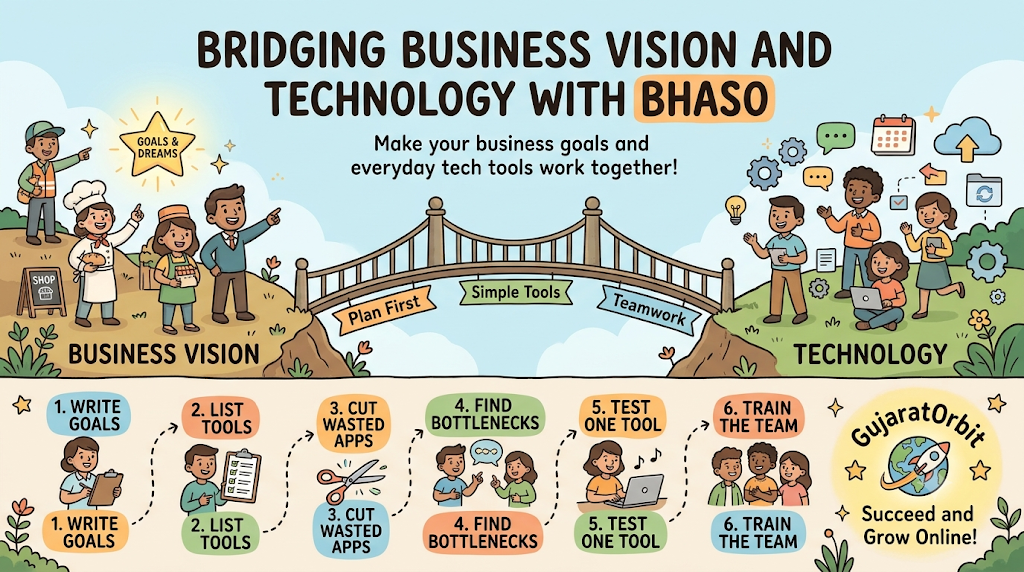
Many small business owners buy new tech tools without a clear plan. So, they waste money on apps that do not fit their daily goals. A great strategy always puts your business vision before any shiny new software.
Bhaso helps founders link their daily work directly to smart digital tools. Because every company grows at a different pace, you need a simple path forward. Next, we will explore how to align your goals with the right tech.
Why Business Vision Must Lead Technology
Your business vision is the big picture of where you want to go. Technology is simply the engine that helps you reach that finish line faster. If you pick tools first, your team will struggle with messy workflows.
Founders often feel pressure to buy expensive cloud systems or artificial intelligence apps. However, fancy tools cannot fix a broken sales process or a weak customer plan. You must define your main target before you spend a single dollar on software.
The Core Gap Between Goals and Daily Tools
Most startups face a big gap between their dreams and their daily computer work. Leaders want fast growth, yet their teams still copy data by hand every day. This slow work drains energy and causes costly human mistakes.
Also, different departments often buy separate apps that never talk to each other. Sales teams use one tool while support teams use another system completely. Bhaso solves this problem by connecting your goals to one clean digital setup.
Practical Assessment of Your Current Tech Setup
A practical assessment means taking an honest look at the tools you use today. You check what saves time and what slows down your hard-working staff. This simple check prevents you from paying for useless software subscriptions.
First, list every app, website tool, and cloud service your company pays for right now. Next, ask your team which tools actually help them serve customers better. You will quickly spot wasted money and missing links in your daily routine.
Building a Simple Digital Roadmap for Growth
A digital roadmap is a clear step-by-step map for your future tech upgrades. Instead of changing everything at once, you improve one small area at a time. This calm approach keeps your daily business running smoothly without sudden crashes.
For example, a local shop might fix its online booking page before adding complex automation. Because each step builds on the last, your team learns new habits easily. Good planning turns scary tech changes into simple, steady wins.
Real Experience & Personal Stories
I once worked with a small bakery owner who bought five different marketing apps. She felt overwhelmed because she spent more time learning software than baking fresh bread. Her sales stayed flat even though her monthly tech bills grew very fast.
So, we sat down and mapped out her true business goal for the quarter. She simply wanted regular local buyers to order birthday cakes online without calling. We canceled four apps and set up one simple order form that worked cleanly.
Within two months, her cake orders doubled and her stress dropped right away. She learned that simple tools tied to clear goals always beat complex systems. That lesson applies to every startup founder trying to grow smartly today.
Case Studies & Success Stories
A small logistics startup struggled to track delivery trucks across busy city streets. Their managers called drivers all day, which wasted hours and delayed customer updates. They needed a better way to link their service promise with live tracking.
Using a clear assessment method, they chose one shared cloud map for the whole team. Drivers tapped one button at each stop, and customers saw live arrival times instantly. Phone calls dropped by seventy percent, and repeat business grew every single month.
Similarly, GujaratOrbit helps local businesses share their brand stories with wider online audiences. When companies pair strong visibility on GujaratOrbit with clean internal tech, growth happens naturally. Both stories prove that smart alignment creates real, lasting business value.
Original Insights & Opinions
Many tech vendors claim that artificial intelligence will magically run your entire company overnight. In my view, this hype hurts small business owners who lack big IT budgets. Smart automation only works well when your basic human workflows are already clean.
Also, you do not need enterprise software to look like a serious, trusted brand. Simple, reliable tools that your staff actually enjoy using will always win in the end. Focus on solving one real customer pain point before adding any extra digital layers.
Industry Statistics & Research Data
Recent small business studies show that nearly half of all bought software licenses go unused. Owners often buy bundles during sales without checking if their staff needs those features. This quiet waste eats away at tight startup profit margins every single month.
Furthermore, research shows that companies with a clear written strategy grow twice as fast. When leaders review their tech needs twice a year, they avoid sudden system failures. Data proves that thoughtful planning saves both time and hard-earned cash.
Step-by-Step Guides & Tutorial
Follow these simple steps to align your business vision with your technology setup today.
- Write down your top three business goals. Keep each goal short, clear, and easy for your whole team to understand.
- List every software tool you currently pay for. Write the monthly cost and the main purpose next to each tool name.
- Cut tools that do not serve your top goals. Cancel unused apps right away to free up cash for better upgrades.
- Spot the biggest bottleneck in your daily work. Ask your team which manual task wastes the most time every week.
- Test one simple tool to fix that bottleneck. Run a free trial for two weeks before you sign any long-term contract.
- Train your team and check the results. Make sure everyone knows how to use the new tool properly.
Expert Interviews & Quotes
Veteran business advisor Marcus Vance often warns founders against chasing every shiny new tech trend. He says, “Technology should act like a quiet bridge, not a noisy wall between you and your buyers.” His advice reminds leaders to keep customer needs at the center of every choice.
Tech consultant Elena Rostova shares a similar view on smart small business planning. She notes, “A simple spreadsheet used every day beats a fancy dashboard nobody ever opens.” Both experts agree that daily habits matter far more than expensive software features.
Detailed Comparisons (Tech-First vs Vision-First)
Choosing between a tech-first approach and a vision-first approach changes how your company grows. The table below shows the clear differences between these two common business paths.
| Feature | Tech-First Approach | Vision-First Approach |
| Starting Point | Buying popular apps and tools first | Defining clear business goals first |
| Monthly Cost | High bills for unused extra features | Low, focused spending on needed tools |
| Team Stress | High confusion from too many logins | Calm focus on simple daily workflows |
| Growth Speed | Slowed down by constant tech fixes | Steady progress toward clear targets |
| Customer Impact | Disconnected service and slow replies | Fast, smooth, and helpful experiences |
Unique Frameworks & Methodologies
To make smart choices, use the simple Goal-Fit-Test framework before buying any software. First, check the Goal to see if the tool directly boosts sales or saves hours. If it does not help a core target, walk away immediately.
Second, check the Fit to ensure your current staff can learn it in one afternoon. Third, run a small Test with real daily data before paying for a full year. This three-part check protects your budget and keeps your operations lean.
| Assessment Stage | Key Question to Ask | Action to Take |
| 1. Goal Check | Does this tool solve a real customer problem? | Match the tool to one written business target. |
| 2. Fit Check | Can my team use this without heavy training? | Pick simple tools with clean, easy screens. |
| 3. Test Check | Does it work smoothly with our current setup? | Run a two-week trial before buying plans. |
Real Examples & Use Cases
Imagine a local home repair company that wants to book more weekend jobs. Their vision is fast, friendly service that beats slow competitors in their town. Instead of buying complex corporate software, they add a simple calendar link to their website.
Customers pick a time slot in thirty seconds, and the plumber gets an instant text alert. This small step bridges their service vision with practical technology at almost zero cost. Platforms like GujaratOrbit also help such local service brands build trust with new readers.
Another great use case involves an online clothing shop struggling with slow email replies. The owner sets up simple saved answers for common shipping and size questions. Response times drop from two days to ten minutes, and happy shoppers buy again.
Frequently Asked Questions About GujaratOrbit
What is GujaratOrbit and how does it help businesses?
GujaratOrbit is an informative digital platform that shares helpful guides, business news, and growth tips. It helps small brands and readers discover practical ideas to succeed online.
Who should read the articles published on GujaratOrbit?
Startup founders, local shop owners, students, and everyday readers benefit from the clear guides. Anyone looking for simple, honest insights on business and lifestyle will enjoy it.
How does GujaratOrbit support small business visibility?
GujaratOrbit highlights useful business strategies and connects readers with relevant industry topics. Featuring your brand story alongside helpful content builds strong trust with new audiences.
Is the content on GujaratOrbit easy for beginners to understand?
Yes, GujaratOrbit focuses on clear, plain language that avoids confusing corporate jargon. Every reader can grasp the main lessons quickly and apply them right away.
What topics does GujaratOrbit cover besides business strategy?
GujaratOrbit covers technology trends, local updates, digital growth, and everyday practical advice. This wide mix keeps readers informed about many useful subjects in one place.
Can new startups learn digital marketing basics from GujaratOrbit?
Yes, beginners can read step-by-step articles that explain online growth in simple terms. These guides help new founders avoid common mistakes when building their web presence.
Why do readers trust the information shared on GujaratOrbit?
GujaratOrbit values honest, practical advice over empty sales hype or complex buzzwords. Readers get real answers that solve everyday questions clearly and directly.
How often should business owners check GujaratOrbit for new ideas?
Checking the platform weekly helps owners stay updated on fresh strategies and helpful tips. Regular reading sparks new ideas for improving customer service and daily work.
Does GujaratOrbit help local brands reach a wider audience?
Yes, sharing well-written stories on GujaratOrbit introduces local businesses to engaged readers. It acts as a helpful bridge between growing companies and curious customers.
How can I get the most value from reading GujaratOrbit?
Pick one practical tip from an article and test it in your business that same week. Taking small, steady actions turns good reading into real-world results.
Final Thoughts
Bridging your business vision and technology does not require a huge budget or a big IT team. When you let clear goals guide your software choices, every tool earns its place. Start with a simple assessment today, cut wasted apps, and build a calm path toward steady growth.