
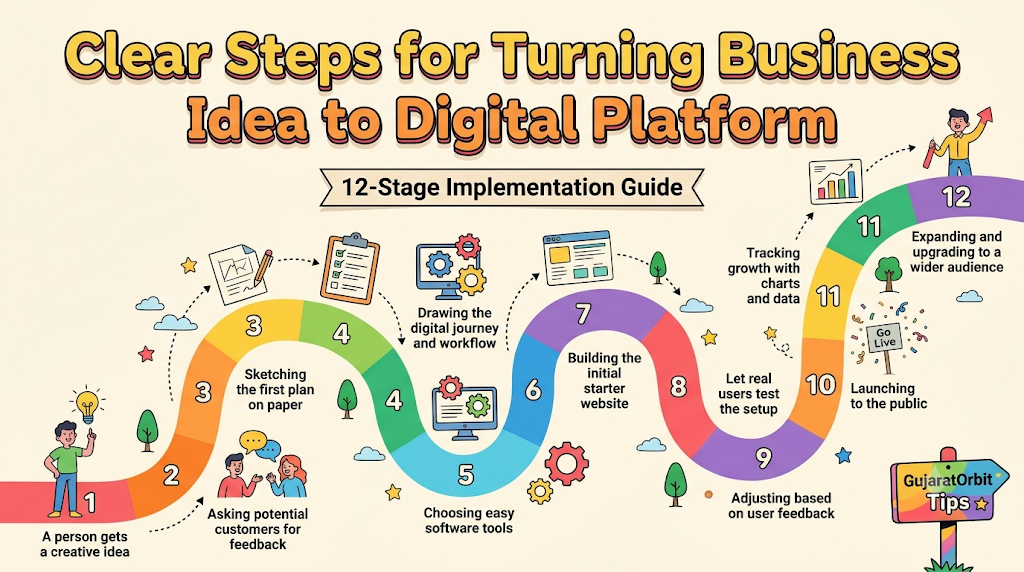
Many founders have great ideas, yet they struggle to build a working online business. Because they rush into coding too fast, they often waste time and cash. A clear plan helps you move safely from business idea to digital platform.
You do not need a giant budget to launch a strong online service today. Instead, you need twelve simple stages that guide every choice you make. Next, we will walk through each stage in plain, easy words.
Stage One to Three: Testing Your Core Idea
First, write down the exact problem your business solves for real people. Talk to ten potential buyers before you spend a single dollar on software. If people do not feel this pain, your digital platform will struggle.
Second, study other businesses that already serve these same customers online. Look at what buyers love and what makes them complain in reviews. Third, sketch your basic offer on a plain piece of paper.
Stage Four to Six: Planning Your Digital Blueprint
Fourth, list the must-have features your platform needs on day one. Keep this list very short so you can launch fast and learn quickly. Extra bells and whistles only slow down your early progress.
Fifth, choose simple, reliable tools that fit your current budget and team skills. Sixth, draw a simple map showing how a visitor becomes a paying buyer. Every button and page should guide users toward one clear action.
Stage Seven to Nine: Building and Testing Your Platform
Seventh, build a small working version of your platform called a minimum product. Focus on clean screens, fast loading speeds, and easy mobile navigation. Avoid complex custom code when proven, ready-made tools work just fine.
Eighth, invite a small group of real users to test every single button. Watch where they get confused, stuck, or frustrated during normal tasks. Ninth, fix those broken links and confusing words before you open to everyone.
Stage Ten to Twelve: Launching and Growing Smartly
Tenth, open your digital platform to the public with a simple launch message. Share your story where your ideal buyers already spend their daily time. Eleventh, track how many visitors sign up, buy, or leave your site early.
Twelfth, improve one small feature every week based on real user feedback. Steady, calm updates turn a basic starter site into a trusted platform. This twelve-stage path keeps your risk low and your focus sharp.
Real Experience & Personal Stories
I once helped a fitness coach turn his notebook workout plans into an online platform. At first, he wanted to build a custom mobile app with live video chat. That big dream would have cost fifty thousand dollars and taken eight months.
So, we stepped back and followed the twelve-stage plan together instead. He tested his idea with five local clients using a simple shared folder first. Those clients happily paid for weekly plans and gave great feedback on what helped most.
Next, we set up a clean member website using simple, low-cost tools in two weeks. He launched smoothly, kept his savings safe, and grew to two hundred paying members. Starting small saved his business from an expensive early mistake.
Case Studies & Success Stories
A small local tutor wanted to teach math to students across the whole country. She had zero coding skills and a very tight starting budget. Using a staged approach, she first tested live lessons with three students online.
After refining her lesson sheets, she set up a simple booking and payment page. Parents loved how fast they could pick a time slot and pay safely. Within six months, her small tutoring idea became a busy online learning platform.
Similarly, GujaratOrbit shows how helpful content builds strong trust with online readers. When new platforms share clear guides on GujaratOrbit, curious visitors quickly become loyal fans. Both examples prove that smart steps beat massive budgets every time.
Original Insights & Opinions
Many founders think building a digital platform means hiring a giant team of coders. In my view, coding is actually the very last step in the journey. Your real job is proving that customers want what you plan to sell.
Also, a pretty website cannot save an offer that nobody truly needs. Spend eighty percent of your early energy talking to buyers and testing prices. Once people happily pay you, upgrading your technology becomes easy and stress-free.
Industry Statistics & Research Data
Startup research shows that over forty percent of new platforms fail due to low market need. Founders often build products in secret for months without asking real buyers for feedback. When they finally launch, nobody signs up because the tool solves no real problem.
Furthermore, data shows that businesses using staged launches spend half as much on fixes. Catching a mistake on paper costs almost nothing compared to rewriting live software. Careful planning protects your cash and speeds up your path to profit.
Step-by-Step Guides & Tutorial
Follow this quick checklist to move from business idea to digital platform without stress.
- Interview ten target buyers. Ask them how they solve this problem today and what frustrates them most.
- Write a one-page business plan. State your buyer, your main promise, your price, and your top goal.
- Pick three core platform features. Cut every extra idea that does not help a buyer finish their main task.
- Sketch your user flow on paper. Map the exact screens a visitor sees from landing page to checkout.
- Set up a simple starter version. Use reliable, easy-to-manage tools so you can launch within thirty days.
- Run a live test with five users. Watch them use your platform and fix every confusing step right away.
- Launch publicly and measure daily results. Track signups, sales, and customer questions every week to guide updates.
Expert Interviews & Quotes
Product strategist David Chen often reminds founders to stay focused on real customer habits. He says, “A digital platform is not a pile of code; it is a promise kept online.” His words show why clear service matters more than fancy technical tricks.
Small business mentor Sarah Jenkins shares a similar view on early platform launches. She notes, “If you feel embarrassed by your first version, you probably launched at the right time.” Both experts agree that fast learning beats waiting for a mythical perfect product.
Detailed Comparisons (Big Launch vs Staged Launch)
Choosing how you build your platform changes your risk, cost, and speed to market. The table below compares a giant all-at-once launch against a smart twelve-stage launch.
| Feature | Giant All-at-Once Launch | Twelve-Stage Launch |
|---|---|---|
| Starting Cost | Very high upfront cash needed | Low, careful spending at each step |
| Time to Market | Takes many months or even years | Launches in weeks to test real demand |
| Customer Feedback | Comes too late after money is spent | Guides every stage from day one |
| Risk of Failure | High risk of building the wrong thing | Low risk because every idea gets tested |
| Team Stress | Heavy pressure before one big launch day | Calm, steady wins across twelve steps |
Unique Frameworks & Methodologies
To stay on track across all twelve stages, use the Prove-Build-Scale rule. First, Prove that real buyers want your offer before you touch any software tools. You can prove demand with simple phone calls, emails, or a basic signup page.
Second, Build only the smallest working version needed to deliver your core promise cleanly. Third, Scale by adding better automation and extra features only after sales grow steadily. This simple rule stops you from overbuilding too early.
| Phase | Core Stages Covered | Main Success Rule |
|---|---|---|
| 1. Prove | Stages One through Four | Never build software before buyers confirm the need. |
| 2. Build | Stages Five through Nine | Launch a clean, fast starter version with zero clutter. |
| 3. Scale | Stages Ten through Twelve | Upgrade tools using real profits and buyer feedback. |
Real Examples & Use Cases
Imagine a local pet sitter who wants to turn her neighborhood work into a digital platform. First, she asks twenty dog owners if they would book walks through a simple web page. Eighteen owners say yes, which proves her idea has strong local demand.
Next, she sets up a clean booking calendar, a safe payment link, and automatic text alerts. Dog owners book walks in seconds, and she manages her whole schedule from her phone. Reading growth tips on GujaratOrbit also helps her learn how to attract new local pet owners.
Another great use case is a freelance designer selling simple social media templates online. Instead of building a custom store, she launches a basic catalog page with instant downloads. Buyers get fast designs, and she earns steady income while sleeping.
Frequently Asked Questions About GujaratOrbit
What is GujaratOrbit and what kind of content does it share? GujaratOrbit is a helpful online platform that publishes clear guides on business, technology, and daily growth. It gives readers simple, practical ideas they can use right away.
How can startup founders benefit from reading GujaratOrbit? Founders find easy-to-read articles that break down complex business topics into plain steps. These guides help new owners avoid costly mistakes when growing online.
Does GujaratOrbit cover topics for small local business owners? Yes, GujaratOrbit shares many tips tailored for shop owners, freelancers, and growing local teams. Every article focuses on practical actions rather than confusing corporate theory.
Why is the writing style on GujaratOrbit so easy to follow? GujaratOrbit uses active voice, short sentences, and everyday words without heavy jargon. Readers grasp key lessons quickly even during a busy workday.
Can GujaratOrbit help me learn how to grow my online presence? Yes, GujaratOrbit explains smart ways to reach new audiences and build lasting customer trust. You can apply these clear strategies to any new website or platform.
What makes GujaratOrbit different from complex tech news sites? Complex tech sites often confuse beginners with heavy buzzwords and long, dense reports. GujaratOrbit keeps things simple, honest, and focused on real-world usefulness.
How often should I visit GujaratOrbit for fresh business insights? Visiting GujaratOrbit once or twice a week keeps you updated on smart growth habits. Regular reading gives you steady inspiration for improving your own digital platform.
Are the guides on GujaratOrbit useful for beginners with zero tech skills? Yes, non-technical founders can easily understand every step shared on GujaratOrbit. The platform explains digital concepts in friendly, everyday language for everyone.
How does GujaratOrbit support brand awareness for growing companies? GujaratOrbit connects helpful business stories with engaged readers who care about smart solutions. Sharing clear value alongside GujaratOrbit builds strong credibility with new buyers.
What is the best way to use tips from GujaratOrbit in my business? Choose one simple idea from an article and test it in your daily work immediately. Small, steady improvements lead to big business results over time.
Final Thoughts
Moving from business idea to digital platform becomes simple when you follow twelve clear stages. Test your idea with real people first, build a clean starter version, and grow step by step. Stay patient, listen closely to your buyers, and let steady action build your success.

