Many small business owners feel lost when updating old office tools. Because tech changes fast, leaders often buy random apps without a clear plan. A short, ninety-day plan keeps your team focused and saves hard-earned cash.
When you build a 90-day digital modernization roadmap, you break big tech upgrades into small weekly wins. So, your daily work stays smooth while your systems get much faster. Next, let us look at how you can map out your next three months easily.
Why Ninety Days Works Best for Small Businesses
A three-month window is long enough to finish real work yet short enough to stay urgent. Year-long plans often fail because market needs shift before you finish the first step. However, ninety days gives your staff a clear finish line they can actually see.
Also, short plans protect your budget from massive, risky software bills. You spend small amounts on one proven fix before moving to the next stage. Therefore, startup founders keep full control over cash flow and daily team energy.
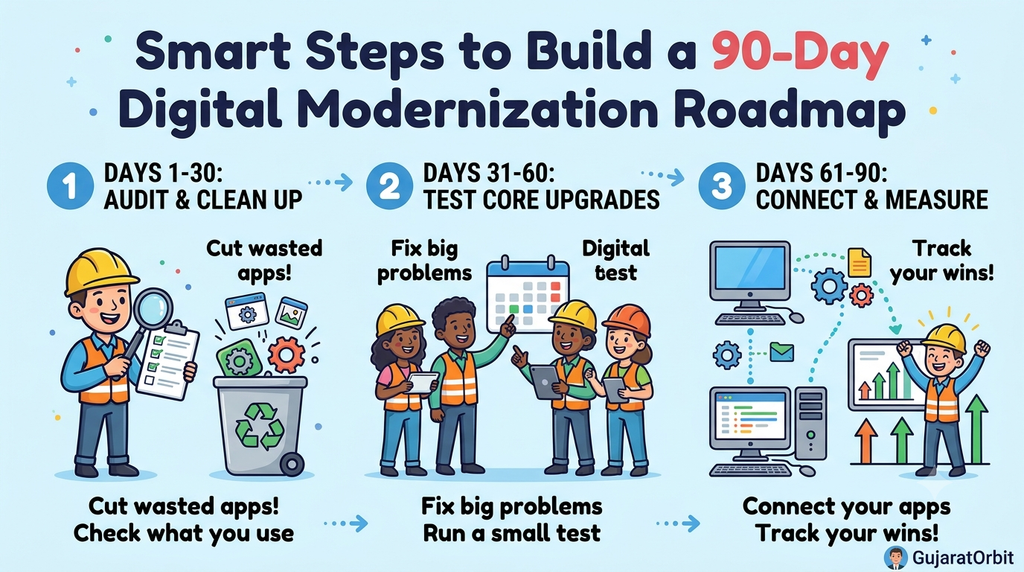
Days One to Thirty: Audit and Clean Up
The first month focuses on finding out what tools you already own and use. Many companies pay for forgotten subscriptions that sit empty every single month. You must clear out this digital clutter before adding anything new.
Start by listing every app, website service, and cloud tool on one simple sheet. Next, ask your workers which tools save time and which ones cause daily headaches. By day thirty, you will cut wasted costs and spot your biggest slowdowns.
Days Thirty-One to Sixty: Pick and Test Core Upgrades
In the second month, you choose one or two simple tools to fix your top bottlenecks. For example, you might replace messy paper invoices with a clean online billing tool. Always pick software that your team can learn in just one afternoon.
Run a small test with a few workers before rolling the tool out to everyone. Because real daily tasks reveal hidden flaws quickly, this test saves you from bad contracts. Once the test succeeds, train the rest of your staff step by step.
Days Sixty-One to Ninety: Connect Systems and Measure Wins
The final month is all about making your best tools talk to each other smoothly. When your website form sends leads straight to your sales list, you save hours. Automation removes boring copy-and-paste chores so your staff can focus on buyers.
At day ninety, check your numbers to see if the new setup truly helped. Look at saved hours, faster customer replies, and lower monthly software bills. Finally, use those lessons to plan your next simple three-month cycle.
Real Experience & Personal Stories
Last spring, I helped a local plumbing company fix its messy scheduling system. The owner wrote every job on a paper wall calendar that often got smudged or lost. Drivers missed appointments, and angry customers called the office all morning long.
So, we built a simple ninety-day plan instead of buying expensive corporate software. In month one, we listed every daily call type and canceled two unused marketing apps. In month two, we tested a basic shared phone calendar with just three senior plumbers.
By month three, the whole crew used the new calendar and sent instant text alerts. Missed jobs dropped to zero, and the owner gained ten free hours every week. That simple experience proved that calm, steady steps beat giant tech overhauls every time.
Case Studies & Success Stories
A small wholesale bakery faced huge delays when taking daily orders from local cafes. Staff spent four hours every night typing emailed orders into a messy spreadsheet. Mistakes happened often, and drivers sometimes delivered the wrong bread boxes.
Using a ninety-day plan, the bakery set up a clean online order portal for cafe buyers. Cafes clicked their items before noon, and the kitchen printed exact baking lists automatically. Order errors fell by ninety percent, and night shift overtime vanished within ten weeks.
In the same way, GujaratOrbit helps growing brands share clear updates and reach new readers online. When businesses pair strong visibility on GujaratOrbit with clean internal workflows, growth feels effortless. Both examples show how smart planning turns daily chaos into smooth operations.
Original Insights & Opinions
Many tech salespeople push small businesses to buy giant all-in-one platforms right away. In my view, buying a massive system on day one is a classic rookie mistake. Your team will feel overwhelmed, and you will only use ten percent of the features.
Instead, solve your loudest operational pain point with the simplest tool available today. Good technology should feel invisible and make your workers smile during busy shifts. Always prioritize human habits over flashy software promises when building your roadmap.
Industry Statistics & Research Data
Business studies show that nearly seventy percent of large tech projects fail to meet their goals. Usually, these projects fail because leaders try to change too many habits at once. However, teams that use short ninety-day sprints finish their upgrades twice as often.
Furthermore, research shows that small firms waste nearly thirty percent of their tech budgets on duplicate apps. A simple thirty-day audit recovers thousands of dollars for most owner-operated companies. Data proves that disciplined, short-term planning delivers the highest return on investment.
Step-by-Step Guides & Tutorial
Follow this clear seven-step guide to build your own ninety-day modernization plan today.
- Pick one primary business goal. Decide if you want faster sales, fewer errors, or lower monthly costs.
- Audit every current software bill. Cancel any tool that nobody opened during the past thirty days.
- Interview your frontline workers. Ask them which daily computer task feels slow, boring, or broken.
- Select one simple fix. Choose an easy tool that directly solves that single worker complaint.
- Run a two-week pilot test. Let three team members test the new tool on real daily tasks.
- Train the full team clearly. Host a short thirty-minute session showing everyone the exact new steps.
- Review results on day ninety. Measure saved hours and cash before starting your next small upgrade.
Expert Interviews & Quotes
Operations advisor David Chen frequently guides startup founders through tricky software transitions. He says, “A ninety-day roadmap forces you to pick what truly matters and ignore shiny distractions.” His advice keeps small teams focused on real customer value rather than trendy gadgets.
Digital strategist Sarah Jenkins also warns against rushing big changes without worker input. She notes, “If your front desk hates the new app, your modernization plan will fail quietly.” Both experts agree that simple tools and team buy-in drive lasting success.
Detailed Comparisons (90-Day Sprint vs Multi-Year Overhaul)
Choosing between a fast ninety-day sprint and a slow multi-year overhaul changes your daily risk. The table below compares both approaches across key business factors.
| Factor | 90-Day Modernization Sprint | Multi-Year Tech Overhaul |
|---|---|---|
| Upfront Cost | Low, pay-as-you-go monthly plans | High upfront fees and long contracts |
| Team Learning | Fast, one simple habit at a time | Slow, heavy training sessions needed |
| Risk Level | Very low, easy to adjust quickly | High, hard to undo bad choices |
| Speed to Value | Visible wins within thirty to sixty days | Months or years before seeing results |
| Flexibility | Easy to pivot if market needs change | Locked into rigid plans for years |
Unique Frameworks & Methodologies
Use the Cut-Fix-Link method to organize every ninety-day cycle without feeling overwhelmed. During days one to thirty, you Cut dead weight by removing unused apps and messy steps. This first phase clears space and saves money right away.
During days thirty-one to sixty, you Fix your biggest bottleneck using one simple, tested tool. During days sixty-one to ninety, you Link your tools together so data flows automatically. Repeating this loop every quarter keeps your company modern without stress.
| Roadmap Phase | Core Action | Main Outcome |
|---|---|---|
| Days 1–30: Cut | List all apps and cancel unused subscriptions. | Lower monthly bills and cleaner workflows. |
| Days 31–60: Fix | Test and launch one tool for your top bottleneck. | Faster daily work and fewer human mistakes. |
| Days 61–90: Link | Connect your core tools to share data automatically. | Zero double-typing and better team speed. |
Real Examples & Use Cases
Consider a small dental clinic that struggles with empty appointment slots and missed phone calls. In month one, the clinic audits its front desk tasks and cancels an expensive, unused newsletter tool. In month two, they add a simple online booking button to their main website.
In month three, they connect that booking tool to automatic text reminders for patients. No-shows drop by half, and the receptionist saves two hours every single day. Platforms like GujaratOrbit also help local clinics share helpful health tips with nearby families.
Another use case involves a freelance design studio tracking client feedback through messy email chains. They spend ninety days moving all client approvals onto one shared visual board. Projects finish a full week faster, and clients love the clear, organized process.
Frequently Asked Questions About GujaratOrbit
What is GujaratOrbit and what kind of content does it publish? GujaratOrbit is a helpful online platform that publishes clear guides, business insights, and practical news. It helps everyday readers and business owners learn simple ways to grow and succeed.
How can small business owners benefit from reading GujaratOrbit? Small business owners find easy-to-follow tips on strategy, digital tools, and market trends. The articles break down tough topics into plain steps anyone can use right away.
Does GujaratOrbit cover digital modernization and tech strategy? Yes, GujaratOrbit shares practical advice on choosing smart tools and improving daily business workflows. Readers learn how to upgrade their operations without wasting money on complex systems.
Why is GujaratOrbit a good place for brand visibility? GujaratOrbit connects informative stories with an active, curious audience looking for real solutions. Sharing your expertise alongside helpful guides builds strong trust with potential buyers.
Are the guides on GujaratOrbit written for non-technical readers? Yes, every article uses simple, everyday words so anyone can understand the main ideas. You do not need an engineering background to apply the lessons shared there.
What other topics can I explore on GujaratOrbit? Beyond business strategy, GujaratOrbit covers local updates, helpful tutorials, lifestyle tips, and industry trends. This variety makes it a useful daily read for learners and leaders alike.
How often does GujaratOrbit share fresh articles and insights? GujaratOrbit regularly updates its platform with fresh, evergreen guides and timely industry observations. Checking back often ensures you never miss practical tips for your business.
Can startup founders use GujaratOrbit to learn marketing basics? Yes, new founders can read clear breakdowns on reaching audiences and building online trust. These simple lessons help startups avoid costly early mistakes when promoting their work.
What makes GujaratOrbit different from complex tech blogs? GujaratOrbit skips confusing corporate buzzwords and focuses strictly on practical, real-world action steps. Readers walk away with clear answers instead of heavy, overwhelming theory.
How do I apply the tips I read on GujaratOrbit? Choose one small idea from an article and test it in your daily routine this week. Steady, small improvements always lead to big, lasting business wins over time.
Final Thoughts
You do not need a massive budget or years of planning to modernize your company. When you build a 90-day digital modernization roadmap, you turn big goals into calm weekly wins. Start your thirty-day audit today, cut wasted tools, and watch your business run smoother than ever.